Global Open Science Data Commons 2026: News Update

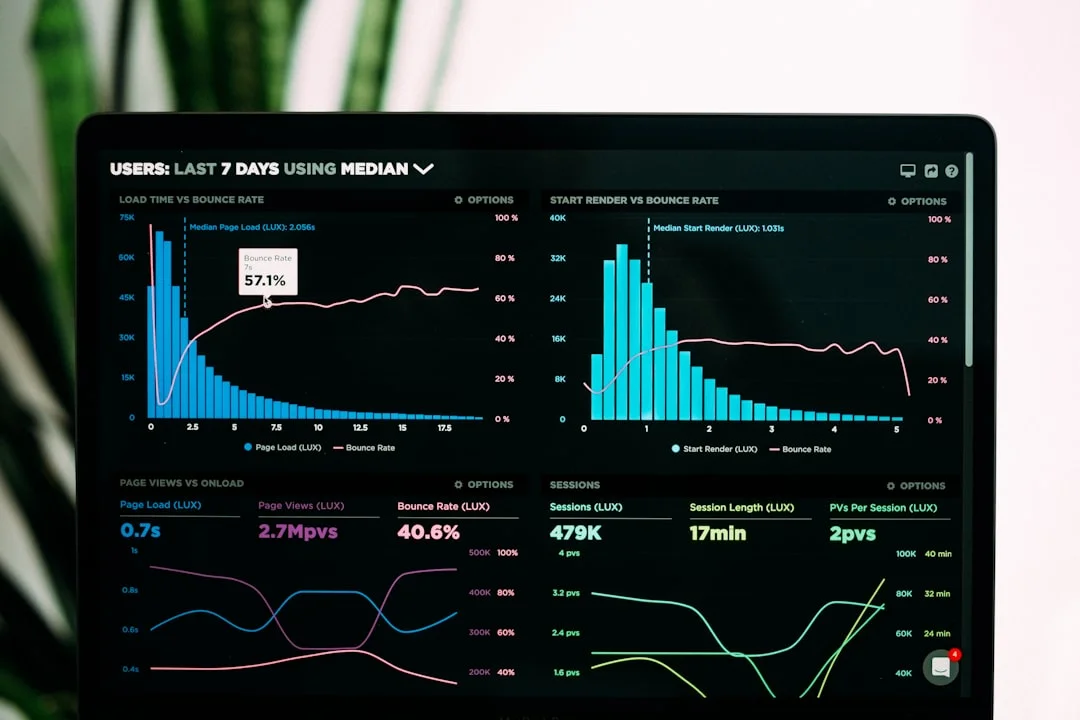
Photo by Luke Chesser on Unsplash
The Cambridge Review today reports on a turning point for research infrastructure: Global open science data commons 2026 is moving from a policy aspiration to a live, federated ecosystem. In mid-May 2026, researchers and funders worldwide observed a flurry of activity around global data-sharing architectures that promise borderless access to high-quality research outputs. This momentum is driven by concrete programs, such as the European Open Science Cloud (EOSC) Data Commons, which announced an open testing phase with a first public release planned for June 2026, and by a broader, international conversation led by organizations like UNESCO and CODATA about how to align data infrastructures on a global scale. As the industry tracks these developments, the news is clear: the vision of a Global open science data commons 2026 is becoming a tangible roadmap for interoperable data discovery, access, and reuse. (eosc-data-commons.eu) (arxiv.org)
For scientists, data managers, funders, and industry partners, the implications are immediate. The OSDF, or Open Science Data Federation, has published work describing a global data access network that builds on established cache and delivery networks to enable cross-border data sharing and computing workflows. The publication date of the OSDF article — May 14, 2026 — underscores a critical moment when researchers can begin to test and evaluate a federated data fabric that could underpin the Global open science data commons 2026. Meanwhile, EOSC Data Commons has opened an explicit path for non-EOSC members to participate in testing, with the first release in June 2026 focused on discovery and interoperability through metadata standards such as OAI-PMH and DataCite. Taken together, these signals mark a decisive shift toward a federated, interoperable, and globally accessible data landscape. (arxiv.org)
UNESCO’s framing of Global Open Science Cloud (GOSC) adds an essential global lens to the conversation, describing an international, cooperative framework designed to connect research infrastructures across borders. The GOSC concept emphasizes interoperability, governance, and sustainable funding as core pillars, positioning it as a global counterpart to regional and national clouds like EOSC. In essence, the GOSC is one of the leading articulations of what a truly global data commons could look like in practice, aligning policy, technical standards, and governance structures to enable cross-continent collaboration on urgent scientific challenges. The UNESCO page on Building a Global Open Science Cloud highlights that the initiative aims to unlock borderless access to digital resources for grand challenges such as pandemics, climate change, and biodiversity loss. This context helps frame the broader significance of the May–June 2026 developments as part of a longer arc toward global interoperability. > “The Global Open Science Cloud aims to connect various international, national and regional research infrastructures to create a global digital environment for borderless research and innovation.” (unesco.org)
Section 1: What Happened
Announcement details
Global momentum toward interoperable data infrastructures

The moment in focus is not a single press conference but a collection of coordinated moves across major research infrastructures. First, the EOSC Data Commons project publicly articulated an open call to test the first release of its services, signaling concrete, near-term steps toward a federated system that can link disparate repositories and tools. The call identifies June 2026 as the target window for the initial release, with a staged onboarding plan that prioritizes discovery, metadata integration, and basic interoperability workflows rather than full production-grade integration. This is described on the EOSC Data Commons site, which emphasizes that selected participants will gain early access to tools like EOSC Matchmaker and EOSC Data Player to discover, access, and execute analyses on datasets across a federation of repositories. The open call explicitly invites data repository managers, research infrastructures, and tool developers to participate, with a six-month submission window ending August 31, 2026. (eosc-data-commons.eu)
Global data federation as a strategic objective
Separately, the Open Science Data Federation (OSDF) — described in an arXiv preprint published May 14, 2026 — frames a global data access network that expands existing federations to include more data origins, caches, monitoring, and accounting mechanisms. The OSDF paper argues that a global data federation is essential for modern science as data and compute scale across collaborations, and it notes the OSDF’s adoption within the U.S. national cyberinfrastructure landscape, reflecting a growing push toward cross-domain data sharing at scale. Together with EOSC Data Commons, OSDF underscores a trend toward federated architectures that do not rely on a single central data store but rather a network of interoperable nodes. (arxiv.org)
The policy and governance backdrop
The governance and policy context for these developments is also evolving. The EOSC Macro-Roadmap describes a living, iterative catalog of EOSC outcomes and deliverables created through a partnership among the EOSC Association, Horizon Europe-funded projects, and the European Commission. The Macro-Roadmap notes ongoing work to align standards, metadata, and services across the EOSC ecosystem, with a view to strengthening the federation and enabling cross-border data access. This governance framework underpins the immediate actions in 2026 and shapes how a broader Global open science data commons 2026 could operate in practice. (eosc.eu)
Global open science data commons 2026 in the real world
In practical terms, the June 2026 release of the EOSC Data Commons services marks a concrete, near-term milestone within the broader global conversation about data commons. It demonstrates how regional infrastructures can be wired together with standards and interoperable services to create a wider, global ecosystem for researchers. The open call’s six-month window (through August 31, 2026) signals a deliberate acceleration in onboarding external repositories, tools, and communities to participate in this shared data fabric. The emphasis on metadata schemas (e.g., DataCite, OAI-PMH) is a deliberate design choice to ensure cross-domain interoperability and machine-actionable data discovery from day one. (eosc-data-commons.eu)
Section 2: Why It Matters
Impact on researchers and institutions
Accelerated discovery and reproducibility

The Global open science data commons 2026 agenda foregrounds rapid discovery by enabling researchers to search, access, and reuse datasets across institutional boundaries. The OSDF paper explicitly frames data federation as a critical mechanism for distributing data to processing sites and enabling cross-institution collaboration. In practice, this could translate to faster replication of experiments, cross-laboratory validation, and more robust meta-analyses. The EOSC Data Commons’ first release focuses on discovery and interoperability, which are the foundational steps toward more complex, cross-disciplinary workflows that could shorten the time from data generation to insight. For researchers, this matters because it reduces the friction involved in locating relevant datasets, applying consistent metadata standards, and running analyses in compatible computing environments. (arxiv.org)
A practical takeaway from the GOSC–EOSC–OSDF ecosystem: the priority on interoperable metadata and discoverability translates into tangible efficiency gains for researchers who formerly spent substantial effort reconciling disparate data schemas across labs. (unesco.org)
Fair access and inclusion
The global frame emphasizes FAIR data principles, broad participation, and equitable access to research outputs. UNESCO’s Global Open Science Cloud concept explicitly ties the global cloud to inclusive access to digital resources, bridging gaps across countries and disciplines. As Canada, Europe, Asia, and other regions advance their own data commons, the shared emphasis on openness and governance will help leveling access for researchers in under-resourced settings, enabling more diverse participation in global research programs. UNESCO’s framework and the GOSC narrative provide a normative backdrop for the practical steps taken in EOSC Data Commons and OSDF. (unesco.org)
Impacts on policy, funders, and industry
Policy alignment and cross-border collaboration
Governments and funders are increasingly aligning their open data and data governance policies with global interoperability goals. Science Europe’s March 2026 position on the future of EOSC post-2027 underscores the importance of a connected, FAIR data landscape as a strategic objective, particularly given the intensifying global competition for data. As funders and policy makers map their investments to the EOSC Federation and related initiatives, the 2026 developments rest on a broader consensus that data is a shared infrastructure for science and innovation. This alignment has implications for how research programs are funded, how data stewardship is rewarded, and how cross-border access is regulated. (scienceeurope.org)
Market and economic implications
From a market perspective, the emergence of federated data commons increases demand for interoperable data platforms, data licensing frameworks, and infrastructure that can scale across organizations and borders. Partnerships between cloud providers, academic consortia, and government agencies are likely to intensify as the value of shared data ecosystems becomes more evident. The OSDF literature and EOSC-related roadmaps point to a trend toward shared services, federated authentication, and standardized metadata as revenue and collaboration enablers for technology providers and service integrators. While the precise commercial models are still evolving, observers note a growing market for data marketplace services, data licensing clarity, and governance tooling that can operate across jurisdictions. (arxiv.org)
Global alignment and the broader research ecosystem
Global open science cloud as a coordinating mechanism

The UNESCO GOSC framing, combined with CODATA’s ongoing discussions and EOSC governance efforts, positions Global open science data commons 2026 as a coordinating mechanism rather than a single, centralized platform. In practice, this means a federation of interoperable nodes — data repositories, computing environments, and service layers — connected through common standards, interoperable metadata, and shared governance principles. The result could be a globally distributed rather than centrally hosted data space, enabling researchers to work with data across continents while preserving sovereignty and governance controls. The UNESCO and CODATA materials underscore this federated, interoperable approach and provide a policy-backed rationale for the technical work taking place in 2026. (unesco.org)
Real-world use cases and early experiments
Ocean and earth science data collaborations
Blue-Cloud 2026 is a notable example of EOSC-aligned work to federate marine data services across Europe, delivering FAIR and open data and analytical tools for ocean and coastal research. The project demonstrates how a domain-specific data commons can scale to a federated model while delivering practical tools for scientists. This approach illustrates one pathway by which the broader Global open science data commons 2026 vision could be realized in specialized scientific communities, with lessons learned in data interoperability, service delivery, and cross-institution collaboration that can be generalized to other domains. (blue-cloud.org)
Data federation in practice
The OSDF’s focus on building a global data access network by extending StashCache infrastructure provides a concrete blueprint for data movement and accessibility at scale. While OSDF remains a national-scale effort in the U.S., the architecture and governance considerations it raises are directly relevant to global open science data commons discussions. The cross-pollination of ideas between OSDF, EOSC Data Commons, and GOSC discussions helps mature a standardized, scalable approach to data sharing across borders, which is precisely the objective behind the 2026 momentum. (arxiv.org)
Section 3: What’s Next
Near-term milestones to watch
June 2026 first EOSC Data Commons release
The EOSC Data Commons is slated to release its first public version in June 2026, focusing on federation-enabled discovery and metadata interoperability. This milestone will test core capabilities such as metadata harvesting, cross-repository discovery, and the ability to pair data with basic processing tools in a cross-disciplinary context. As the first release rolls out, researchers and data stewards should expect early onboarding experiences, with continuing refinement in subsequent releases. The release plan and the six-month open call window (closing August 31, 2026) set a concrete schedule for early adopters and providers to participate in shaping the ecosystem. (eosc-data-commons.eu)
August 31, 2026: Open call submission deadline
The EOSC Data Commons open call window closes on August 31, 2026. This deadline frames a period of intense activity as institutions prepare proposals to test and validate the first release’s interoperability workflows. The six-month timeline also creates an opportunity for the EOSC Data Commons team to gather feedback that will inform subsequent releases and feature priorities, helping to align the ecosystem with a broad set of research communities. (eosc-data-commons.eu)
Ongoing governance and federation work
Beyond the June 2026 release and August 2026 deadline, governance developments around EOSC and GOSC will continue to unfold. The EOSC Macro-Roadmap, updated periodically, tracks the alignment of technical components, policies, and funding across the federation and with broader global initiatives. The governance conversation includes the interplay between EOSC, Horizon Europe programs, and the European Commission, with attention to how these elements scale to global coordination. Observers will want to monitor the EOSC Association’s activity pages and Science Europe’s position papers as signals of how post-2027 EOSC and global data commons governance will evolve. (eosc.eu)
Longer-term outlook and milestones
Global interoperability and legal frameworks
As the global data commons concept gains traction, expect continued emphasis on interoperable data schemas, licensing harmonization, and clear governance structures that accommodate diverse legal regimes. UNESCO’s GOSC framing explicitly points to policy and governance as core levers for sustainable global collaboration, while CODATA’s ongoing work highlights the need for formal mechanisms to align cross-domain standards and trust across jurisdictions. The convergence of policy and technology around 2026–2028 could lead to new cross-border data-sharing agreements, licensing templates, and governance models designed to sustain the global open science data commons. (unesco.org)
Data stewardship, incentives, and metrics
As data commons mature, there will be increased attention to incentives for data stewardship, standardized metrics for FAIRness, and recognition frameworks for researchers who contribute high-quality datasets. EOSC’s own work on FAIR metrics and data stewardship, together with the broader EOSC federation efforts, will likely influence national funding calls and research evaluation criteria. The evolution of these incentive structures will shape how researchers publish, share, and reuse data, further reinforcing the global data commons architecture. (eosc.eu)
Closing
The unfolding story around Global open science data commons 2026 presents a spectrum of concrete, near-term milestones and longer-term policy and governance challenges. The June 2026 first release of EOSC Data Commons services and the May 2026 OSDF publication mark a transition from conceptual planning to practical testing and real-world use. UNESCO’s global perspective on the GOSC, together with the EOSC Macro-Roadmap’s governance framework and the ongoing work to harmonize data practices across federations, points to a future in which researchers, institutions, and funders increasingly operate within a federated data ecosystem. For researchers, data managers, and technology providers, the practical takeaway is clear: align data discovery, access, and reuse with interoperable metadata standards, participate in open testing programs, and stay attuned to evolving governance and licensing norms. By embracing these developments, the global scientific community can accelerate discovery, improve reproducibility, and strengthen international collaboration in a way that truly embodies the spirit of Global open science data commons 2026.
Stay updated through EOSC Data Commons updates, OSDF preprints and implementation reports, and UNESCO’s ongoing coverage of Global Open Science Cloud initiatives, as more concrete releases, governance decisions, and cross-border agreements emerge in the months ahead. (eosc-data-commons.eu)