Kavli Prize 2026 Cambridge Neuroscience Winners
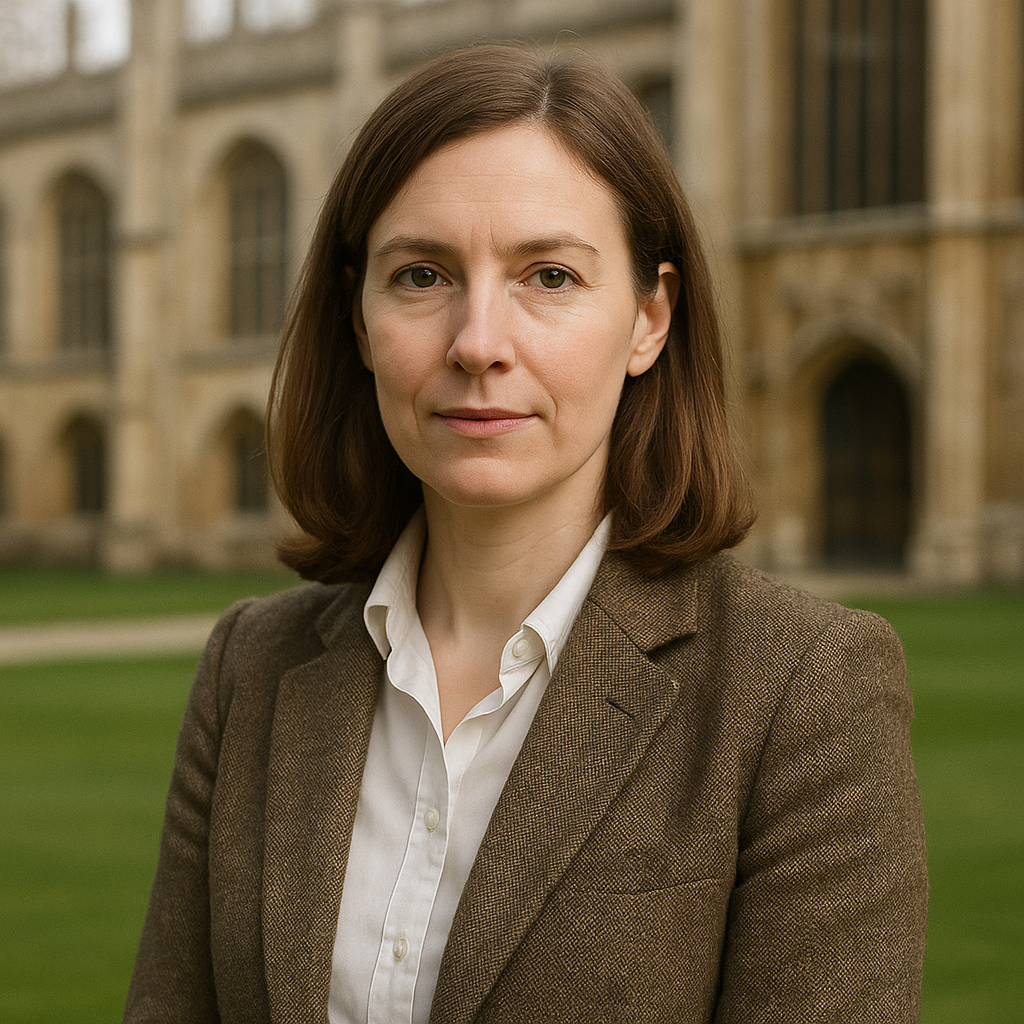

The Kavli Prize 2026 Cambridge neuroscience landscape is shifting as four scientists are recognized for a discovery that reshapes our understanding of how the brain learns, adapts, and repairs itself. The Norwegian Academy of Science of Letters has announced the Kavli Prize in Neuroscience 2026, honoring a quartet of researchers whose work on local translation in neurons has changed foundational assumptions about neural development and plasticity. Among the laureates is Christine Holt of the University of Cambridge, a figure whose Cambridge affiliations anchor a broader, globally collaborative achievement in neuroscience. The prize carries a substantial award, reflecting the prize’s history of funding significant advances in brain science. (kavliprize.org)
The formal honors come with a clear signal about the direction of translational neuroscience: local protein synthesis at synapses and dendrites plays a central role in how neurons wire together during learning and recovery. The Kavli Committee’s citation highlights how Holt’s Cambridge-associated work sits alongside the research of Kelsey Martin, Erin Schuman, and Oswald Steward, collectively establishing that neurons can produce essential proteins locally, near where signals are received and integrated. This distributed model of protein synthesis has implications for understanding memory formation, developmental guidance, and potential therapeutic avenues for a range of brain disorders. The prize designation and the accompanying committee’s remarks underscore a sustained effort to map local translation as a fundamental mechanism in neural function. (kavliprize.org)
The prize announcement emphasizes the scale of recognition: each Kavli Prize in Neuroscience includes USD 1,000,000, accompanied by a medal and formal ceremonies in Oslo later in the year. The 2026 laureates—Christine Holt (Cambridge), Kelsey Martin (Simons Foundation), Erin Schuman (Max Planck Institute for Brain Research), and Oswald Steward (UC Irvine)—are celebrated for breakthroughs that reveal how motor and cognitive functions hinge on local protein synthesis at synapses and growth cones. The UC Irvine press release confirms Steward’s inclusion and notes the timing of the public announcement in June 2026, with the Oslo ceremony set for September 2026. (kavliprize.org)
Opening paragraph recap: Kavli Prize 2026 Cambridge neuroscience recognition marks a pivotal moment for how scientists understand learning, memory, and neural repair. Christine Holt’s Cambridge affiliation anchors a prize that highlights a four-way collaboration across major neuroscience centers, including Martin, Schuman, and Steward, whose work collectively reframes where and how neurons build and remodel their connections. The prize’s monetary value reinforces the significance of these discoveries and supports ongoing research into local translation as a driver of neural plasticity and recovery. (kavliprize.org)
What Happened
Laureates Named Christine Holt of the University of Cambridge, United Kingdom, is named a laureate in the 2026 Kavli Prize in Neuroscience. She shares this honor with Kelsey Martin (Simons Foundation, USA), Erin Schuman (Max Planck Institute for Brain Research, Germany), and Oswald Steward (University of California, Irvine, USA). The Kavli Prize Committee explicitly credits their collective work for identifying and delineating local translation in neurons and demonstrating its importance for brain development and synaptic plasticity. Holt’s Cambridge affiliation is part of a global team recognized for advancing our grasp of how neurons regulate protein production at distant sites, shaping neural circuits with precision. (kavliprize.org)
Prize Details The Kavli Prize in Neuroscience 2026 is awarded by the Norwegian Academy of Science of Letters, with The Kavli Foundation and the Norwegian Ministry of Education and Research overseeing the prize framework. Each Kavli Prize in neuroscience carries USD 1,000,000 and a medal, recognizing breakthroughs that transform our understanding of the brain. The committee’s formal citation centers on the discovery of local translation in neurons and its implications for development, learning, and plasticity. The prize page and associated materials describe the scope of this achievement as a paradigm shift in how scientists view neuronal protein synthesis. (kavliprize.org)
Timeline and Announcement The UC Irvine News Office published a June 10, 2026 feature announcing Oswald Steward as a Kavli Prize in Neuroscience laureate and detailing the four-person award team, including Holt, Martin, and Schuman. The release notes that the recipients will be celebrated at a ceremony in Oslo in September 2026. This timeline—announcement in mid-June 2026, with an Oslo ceremony to follow—aligns with the Kavli Prize’s biennial cadence and public-facing communications. (news.uci.edu)
Ceremony and Next Steps Ceremony plans situate the laureates in Oslo for a formal recognition event in September 2026, consistent with Kavli Prize protocol for neuroscience laureates. The prize also positions the winners to engage with scientific communities, policymakers, and future researchers about the practical implications of local translation in neurons. The combination of a substantial prize and a high-profile ceremony is designed to amplify the reach of these discoveries beyond the lab and into public understanding of brain function and disease. (news.uci.edu)
Cambridge Involvement Christine Holt’s affiliation with the University of Cambridge reinforces Cambridge’s standing in cutting-edge neuroscience research. Holt’s work on local translation in neuronal growth cones and dendrites complements broader Cambridge neuroscience initiatives focused on translation, synaptic biology, and neural development. While the other laureates come from diverse institutions, the Cambridge connection anchors the prize in a city long recognized for its contributions to brain science. The Kavli Prize materials explicitly enumerate Holt among the four neuroscience laureates, highlighting Cambridge’s role in this international achievement. (kavliprize.org)
Why It Matters
Impact on Translational Neuroscience The Kavli Prize Committee’s citation emphasizes that local protein synthesis at synapses and growth cones provides a mechanism for rapid, spatially targeted proteome remodeling in response to neural activity. The laureates’ work shows that neurons can generate essential proteins locally, enabling fast, synapse-specific changes that support learning and memory and contribute to developmental trajectory and neural repair after injury. This paradigm shift challenges the traditional view that proteins must be synthesized primarily in the cell body and then transported to distant sites, opening doors to new therapeutic strategies aimed at enhancing or correcting local translation processes in neurological disorders. The prize thus signals a major validation of a research axis that Cambridge and partner institutions have helped propel forward. (kavliprize.org)
Broader Context and Implications By foregrounding local translation, the 2026 Kavli neuroscience laureates illuminate a broader principle of brain organization: subcellular compartments within neurons can independently regulate the proteome in ways that influence circuit function, plasticity, and resilience. This has implications for understanding Fragile X syndrome, autism spectrum disorders, and neurodegenerative diseases where dysregulated local translation or impaired synaptic protein synthesis contribute to cognitive and motor impairments. The prize materials describe how mRNA localization, dendritic translation, and local protein synthesis intersect with synaptic strengthening and developmental guidance—areas that continue to attract cross-disciplinary research across neurobiology, molecular biology, and systems neuroscience. (kavliprize.org)
Cambridge and the Global Research Ecosystem The Cambridge neuroscience ecosystem benefits from a long history of collaborative, translational research in cellular and molecular neuroscience. The Kavli Prize’s acknowledgment of Holt, alongside collaborators from the United States and Germany, underscores the value of international, cross-institutional teams in advancing a scientific field that blends basic discovery with potential clinical translation. This global recognition helps attract talent, funding, and collaboration opportunities for Cambridge investigators and partners, reinforcing the city’s role as a hub for neurobiology and brain science. While the laureates represent a range of institutions, the Cambridge connection remains a prominent anchor in the award’s narrative and impact. (kavliprize.org)
Ceremonial Significance and Public Engagement Beyond the scientific significance, the Kavli Prize in Neuroscience 2026 has a ceremonial and public-facing dimension that helps translate complex neural biology into accessible science communication. The committee’s explanation of local translation and its implications provides a narrative arc that can be translated into public lectures, outreach, and educational materials. The Laureates’ profiles—from Holt’s work on growth cones to Steward’s synaptic protein synthesis studies—offer concrete stories about how neurons adapt and learn at a molecular level. This storytelling potential is especially important for expanding public understanding of brain science and for informing science policy in an era of increasing investment in neuroscience research. (kavliprize.org)
What’s Next
Oswald Steward, Christine Holt, Erin Schuman, and Kelsey Martin: A Collaborative Path Forward With the laureates now publicly recognized, the neuroscience community can anticipate continued collaboration across laboratories and institutions that contributed to the prize-winning work. The prize’s emphasis on local translation provides a foundation for new projects that examine how dendritic and axonal protein synthesis interfaces with synaptic plasticity, circuit remodeling, and recovery from nervous system injury. Cross-institutional initiatives may emerge, linking Cambridge’s translational biology strengths with the US and European centers represented among the laureates. The Kavli Prize committee’s perspective on local translation as a central mechanism for learning and development will likely guide future grant proposals and research priorities in neuroscience. (kavliprize.org)
Ceremony, Awards, and Public Discourse The September Oslo ceremony will mark a formal culmination of a process that began with the Norwegian Academy of Science of Letters’ announcement and has continued through public communications and institutional press coverage. Expect follow-up events, interviews, and expert panel discussions that unpack the practical implications of local translation for educational strategies, therapeutic targets, and potential biomarker development. These activities will likely be picked up by universities and research institutes around the world, including Cambridge, as they translate the prize’s scientific insights into broader policy and practice. The prize’s visibility will also influence recruitment, collaboration opportunities, and philanthropic investments in neuroscience research. (news.uci.edu)
What to Watch For
- Oslo ceremony details: While the formal date is in September 2026, organizations involved in neuroscience and translational biology will track the exact program, speaker lineup, and potential joint symposia. The prize framework confirms the Oslo venue and the prize structure, and institutions linked to the laureates may publish related events in the months surrounding the ceremony. (news.uci.edu)
- Cambridge neuroscience discourse: The Cambridge-affiliated laureate Holt will likely be featured in academic and media discussions about local translation and its relevance to development and plasticity. Expect institutional updates from Cambridge that tie Holt’s Kavli Prize to ongoing translational neuroscience programs and collaborations. (kavliprize.org)
- Broader field impact: The laureates’ work on local translation is poised to influence research agendas in molecular neurobiology, synaptic physiology, and neurodegenerative disease research. As new studies emerge, researchers may investigate how local protein synthesis interfaces with neuroinflammation, aging, and recovery processes. The Kavli Prize materials provide a framework for understanding these connections and for evaluating future findings in the context of synaptic remodeling and memory formation. (kavliprize.org)
Closing
The Kavli Prize 2026 Cambridge neuroscience announcement confirms Christine Holt’s joint recognition with three eminent colleagues for a body of work that reframes how scientists think about neuronal protein synthesis and brain plasticity. As Cambridge researchers and global partners digest the implications, expect a wave of academic discussions, new collaborations, and public-facing conversations about how local translation shapes learning, memory, and recovery from brain injury. The prize’s financial heft and ceremonial platform in Oslo will amplify these conversations, helping scientists, funders, and students map the next frontier in translational neuroscience. (kavliprize.org)